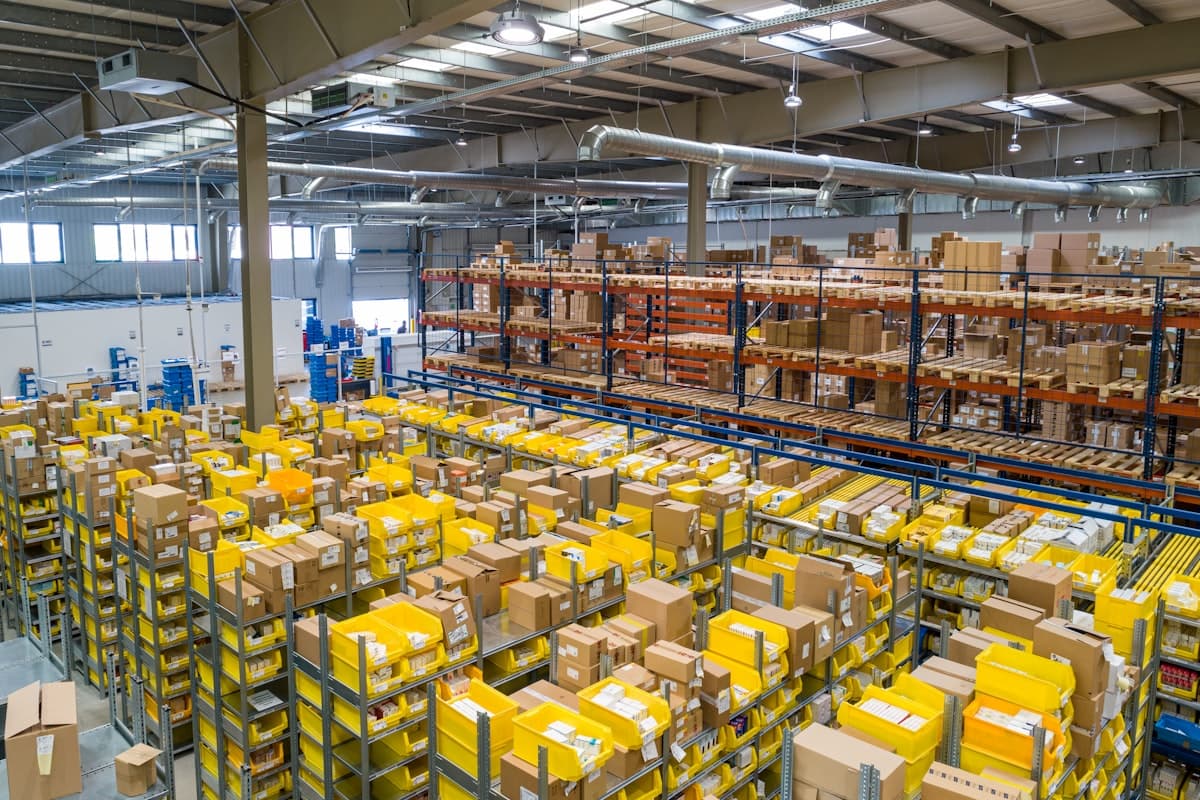
Distribution Center Cleaning Services
Built Around Your Waves
Millennium Facility Services provides distribution center cleaning for operations that do not stop: dock areas, aisles, restrooms, break rooms and offices, scheduled around your pick waves and trailer turns. We service Southwire's Dallas-Fort Worth distribution center and 27+ Southwire facilities overall. A senior member of our operations team walks your building before we write the scope, and GPS clock-in and clock-out give you time-stamped records.
How do you clean a distribution center that never stops?
You build the route around the building's rhythm, not the floor plan. We get your wave schedule and your trailer-turn pattern in writing at the walkthrough, then put the heavy work in the gaps and the light, visible work inside the waves. We close an aisle only with your operations lead's agreement, and we keep wet floors and parked machines out of the lanes forklifts use.
Scope follows tasks and time, not square footage. One aisle may need service every night and another once a week, so we write each zone separately and agree who clears it. For a view of how this fits an overall logistics program, see our guide to distribution facility cleaning.
What does a distribution center cleaning scope include?
These are the zones we scope. Frequencies and shift windows are set at the walkthrough against your waves, doors and safety rules, so they are starting points, not fixed policy.
| Zone | What we scope | How the window is set |
|---|---|---|
| Dock aprons and leveler pits | Compacted debris and packaging scrap from the apron, and material that collects in the pits | Between trailer turns, off peak door hours, with the dock lead |
| Dock doors and staging | Floors, door tracks, debris and high-touch points | In the gaps between waves |
| Forklift aisles | Sweeping and scrubbing, pallet splinters, stretch wrap and cardboard removal | Lowest traffic window, agreed with your operations lead |
| Battery charging areas | Floors and surfaces, using products and rinse steps that suit the area | Coordinated with your site and your own safety procedure on water and electrical |
| Racking, scanner and sensor dust | Dust on uprights, cross beams and sensor-adjacent surfaces, scheduled by risk and priced as a separate item | Planned with operations around inventory, not on a fixed cadence |
| Pick modules, pack stations and shared workstations | Touch points wiped, and cleaned at changeover where stations change hands | Between waves |
| Restrooms and break rooms | Clean first, then disinfect with EPA-registered products, restock, floors | By usage and shift pattern, not the clock |
| Offices and admin areas | Trash, vacuum, glass, kitchenettes | After hours, the first scope to flex |
We do not promise a rack-cleaning cadence on a web page. Dust load, product type and your equipment decide it, and we set it with you.
Why does rack and scanner dust matter?
Dust on high-bay uprights and cross beams falls onto product surfaces and scanner paths. Dust on sensors and equipment can hurt read rates and automation, so the environment is part of whether the building runs well. We scope this work by risk and plan it with your operations team so lifts and aisles are cleared when we need them.
Higher work needs heights and access confirmed on site, which is why we price it after the walkthrough and not blind. Our high dusting guide explains the method.
How does cleaning work in a multi-client 3PL building?
In a 3PL, shared areas get missed when occupants assume the cleaners handle them and the cleaners assume the occupants do. We settle ownership before work starts.
What we settle with you
- Which bays and zones belong to which client, and which areas are common.
- Whether scope, reporting and billing should be split by client.
- How each client's audit or procedure requirements apply when two clients share an aisle.
- Who signs off on quality for each zone.
- How access and badging work for each client.
What the record gives each client
- Timestamped visits for the zones we clean.
- QR room and zone check-ins.
- Photographs of finished work.
- A client dashboard so your team sees the same record we do.
Do you use autonomous floor scrubbers in distribution centers?
Our autonomous floor scrubbers run at Georgia Aquarium. For a distribution center, we look at your aisles, traffic and route at the walkthrough and tell you whether one fits. A scrubber does not replace the crew. People still do the edges, the docks and the detail.
How do we start a distribution center program?
We do not promise a start date before the walkthrough, because access, crew orientation and your safety review set it.
- Step 1
Walk the building
A senior member of our operations team walks the docks, aisles and common areas with your general manager, and we get your wave and trailer-turn pattern.
- Step 2
Write the scope by zone
We write tasks, frequency and windows for each zone, and your safety team gets our product list with a safety data sheet for each.
- Step 3
Orient the crew and settle access
Crews complete your site safety orientation. Badges, gates and the shift contact are agreed in writing.
- Step 4
Go live and review the record
GPS clock-in and clock-out give you time-stamped records, zones are checked in by QR code and photographed. We review the early records with you.
How do your crews work safely around forklifts and freight?
Forklift traffic, wet floors and moving freight change how the work is done. We work to your rules, and we settle them at the walkthrough.
How we work
- Crews complete your site safety orientation before they work on your floor.
- Crews wear the PPE your site requires for each zone, confirmed at the walkthrough.
- We follow your forklift and pedestrian traffic rules and close an aisle only with your operations lead's agreement.
- Your team gets a product list with a safety data sheet for each product before we start.
What stays under your control
- Your forklift and pedestrian routes, and any area you mark off limits.
- Lockout and tagout. We stay out of any area under lockout and do not clean inside machinery.
- Your incident reporting and safety program. We report hazards we find and clean to your housekeeping standard.
What does the visit record show?
Time-stamped records on your dashboard mean you can check last night's work against the written scope instead of taking our word for it.
| On your dashboard | What it tells you |
|---|---|
| Arrival and departure times | When the crew was on site and how long they stayed, from GPS clock-in and clock-out records |
| QR check-in by room or zone | Which rooms and zones were visited, not just that someone was in the building |
| Photographs of finished work | What the area looked like when the crew finished |
| One view across sites | Each site sees its own record, and a multi-site buyer sees all of them side by side |
A check-in proves a visit happened and photographs show the work. Your own inspection is how you confirm it meets your standard, and we welcome it. To click through a sample account, see See It Work.
Where do we service distribution operations?
Distribution center cleaning: common questions
What operations directors, general managers and 3PL account leads ask us.
Millennium Facility Services, based in Alpharetta, GA, provides distribution center cleaning in Georgia and services Southwire's Dallas-Fort Worth distribution center. We have been in business since 1990 and serve 27+ Southwire facilities.
We schedule around your waves and doors. We get the wave schedule and trailer-turn pattern at the walkthrough, put heavy work in the gaps and light work in the waves, and close an aisle only with your operations lead's agreement.
Dock aprons and leveler pits, dock doors and staging, forklift aisles, battery charging areas, pick modules and shared workstations, restrooms, break rooms and offices. Racking and overhead dust is scoped by risk and priced separately.
It depends on traffic, product and dust load. Restrooms, break rooms and offices usually need a daily baseline and dock and aisle zones need regular passes, but we set each zone's frequency at the walkthrough, not from a template.
Aprons collect compacted debris from truck traffic and pits trap material that builds up. We scope both in the dock zone and work between trailer turns with your dock lead, so supervisors start a shift with a clear surface.
We use products and rinse steps that suit the area, and we coordinate with your site and follow your own safety procedure on water and electrical. Your team decides what is acceptable in the area.
Yes. We build the scope around your bay layout, settle who owns each zone and sign-off, and provide a timestamped, photographed record for the zones we clean. Whether reporting is split by client is decided at the walkthrough.
Dust on uprights and cross beams can fall onto product and scanner paths, and dust on sensors can affect automation. We scope racking and sensor-adjacent dust by risk, planned with your operations team.
We price from a written scope, so we quote after the walkthrough. The drivers are the zones and tasks, frequency, shift windows, floor area and the equipment each task needs. A price set before anyone walks the building is a guess, and we do not publish a per-square-foot rate.
Walking-working surfaces under 29 CFR 1910.22 must be kept clean, orderly and sanitary, and chemical labeling and safety data sheets fall under hazard communication, 29 CFR 1910.1200. We follow OSHA-compliant practices and clean to your site's housekeeping standard. We do not call ourselves OSHA certified, because OSHA does not certify contractors.
Tell us which platform your site uses and send the requirements before the walkthrough. We will tell you plainly what we can document and what we cannot.
GPS clock-in and clock-out give you time-stamped records, zones are checked in by QR code and finished work is photographed. It is on your dashboard, and our service completion rate is 99.7%.
Your account contact is the person to call, and you can reach the owner directly if it is not resolved. A supervisor covers a missed shift, and time-stamped records mean a missed area shows up in the record that night.
We carry general liability and workers' compensation coverage, and we send a certificate of insurance on request, with your organization named as additional insured if your contract requires it.
We are an IICRC certified firm, we use EPA-registered disinfectants, and we have been in business since 1990. We are minority and woman owned, though not certified as such. If your supplier-diversity program requires certification, we say so up front.
Use the request button on this page or call (800) 956-8745. A senior member of our operations team walks your building before we write the scope.
Related services and resources
- Distribution Facility Cleaning Guide
- Warehouse Cleaning Services Atlanta
- Warehouse Cleaning Services
- Cold Storage Facility Cleaning
- Manufacturing Cleaning Services
- Industrial Cleaning Services Atlanta
- Southwire Case Study
- Distribution Center Cleaning Guide
- Cleaning a Distribution Center That Never Closes
- Distribution Center Floor Maintenance
- Distribution Center Cleaning Cost Guide
- Commercial Cleaning Dallas-Fort Worth
Tell us how your building runs
Send us your wave schedule, your dock pattern and what is not working today. We will walk it with you and write the scope.