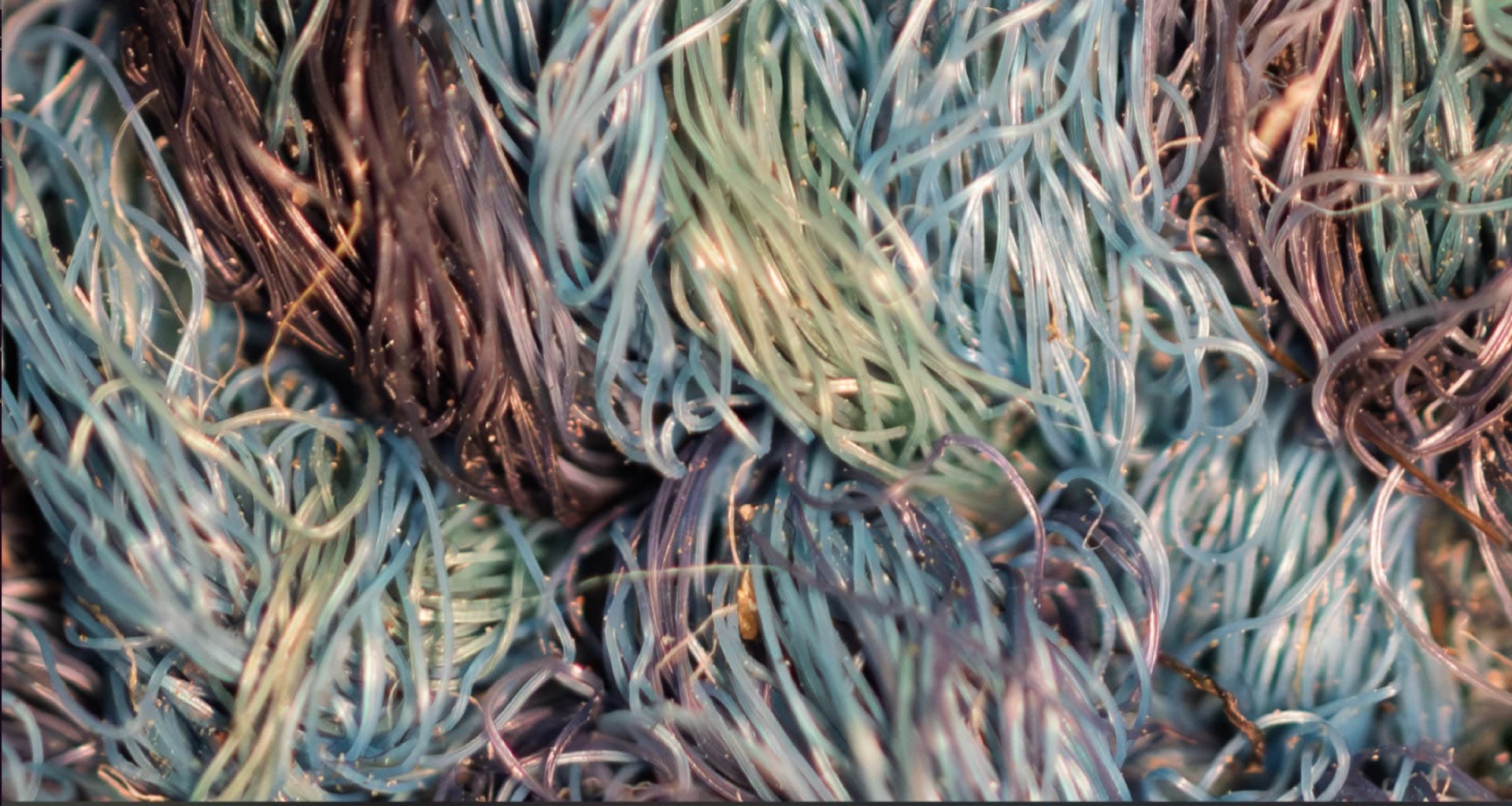
Commercial carpet care.
Done right.
Most carpet cleaning is just wet carpet. We are IICRC certified, which means we choose the right method for the fiber, the soil load, and the environment. The result is carpet that recovers fully and lasts longer.
Millennium Facility Services provides IICRC-certified commercial carpet care for enterprise facilities across Georgia, deploying hot water extraction, encapsulation, carpet protector application, and spot treatment programs matched to the fiber type and soil load of each zone. Encapsulation cleans dry in 30 to 60 minutes for high-traffic areas that cannot close; hot water extraction uses truck-mounted equipment for restorative deep cleans with a rinse and neutralization pass to prevent residue re-soiling. Planned maintenance schedules combine quarterly, monthly, or weekly rotations by traffic zone, and have kept clients including Trilith Studios at zero early carpet replacements.
IICRC certification
is the gold standard.
The IICRC, Institute of Inspection Cleaning and Restoration Certification, sets the technical standards for carpet and floor care that the industry follows. Their certification program is not a one-time test. It requires ongoing education, documented field work, and adherence to published cleaning standards.
For you, that means every technician who touches your carpet understands fiber science, moisture management, and chemical compatibility. Wrong method for the wrong carpet can cause permanent damage, mold, and premature replacement. IICRC certification is how you know that will not happen here.
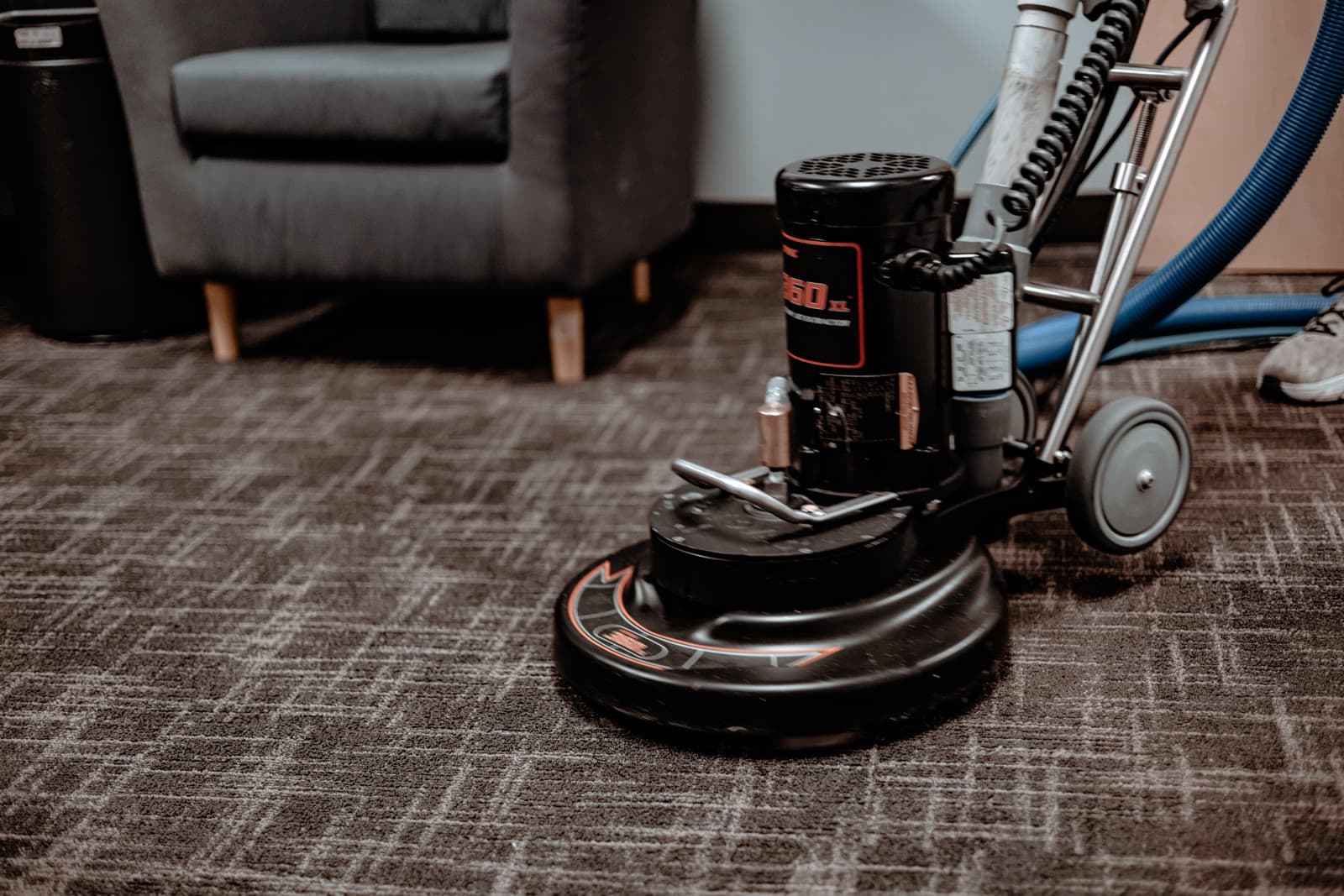
The right method for the job.
One cleaning method does not work on all carpet. Fiber type, pile height, soil load, and dry time requirements all determine which approach produces the best result without damaging the carpet.
Hot Water Extraction
The most thorough method available. Hot water injected under pressure, immediately vacuumed back with the suspended soils. Reaches the base of the pile. Required for heavy soil loads, restorative cleaning, and any carpet that has gone a long time between cleanings.
- Truck-mounted and portable extraction equipment
- Pre-treatment for high-traffic and stained areas
- Rinse and neutralization pass to prevent residue
- Appropriate for most commercial broadloom
Encapsulation
A polymer-based cleaner surrounds soil particles, which are then vacuumed out once dry. Minimal moisture, fast dry time, and no sticky residue that re-attracts soil. The right choice for high-traffic areas that need frequent cleaning without disruption.
- 30 to 60 minute dry time in most conditions
- Reduces re-soiling compared to detergent methods
- Safe for loop pile and commercial tile carpet
- Ideal for interim cleans between hot water extractions
Carpet Protector Application
Applied after a deep clean, protector coats the fibers and creates a barrier against soiling and staining. Soil releases more easily, spills bead up instead of penetrating, and the time between necessary cleanings extends. The economics are straightforward.
- Applied post-extraction while fibers are open
- Significantly increases soil and stain resistance
- Extends maintenance intervals on high-traffic carpet
- Recommended for carpets near dining, entryways, and production areas
Spot Treatment Programs
Reactive spot treatment paired with a protocol so the right products get used on the right stains. Blood, ink, food, grease, and dye-based stains each respond to different chemistry. Treating them incorrectly sets them permanently. We build site-specific protocols for facilities with recurring contamination types.
- Stain-specific chemistry for each contamination type
- Staff training protocols available for first-response treatment
- Documented treatment logs per area for quality tracking
- Integrated into scheduled maintenance programs
Planned Maintenance Schedules
A reactive carpet program is always more expensive than a planned one. We build maintenance schedules around your traffic patterns, carpet types, and budget. The goal is to extend the life of the carpet as long as possible and prevent the kind of deterioration that forces early replacement.
- Traffic zone mapping to prioritize cleaning frequency
- Method rotation based on seasonal soil loads
- Quarterly, monthly, or weekly schedules by zone
- Documented history for warranty and replacement planning
The difference is visible.
When you use the right method for the carpet and the soil type, the recovery is complete. Not just cleaner looking. Actually restored.
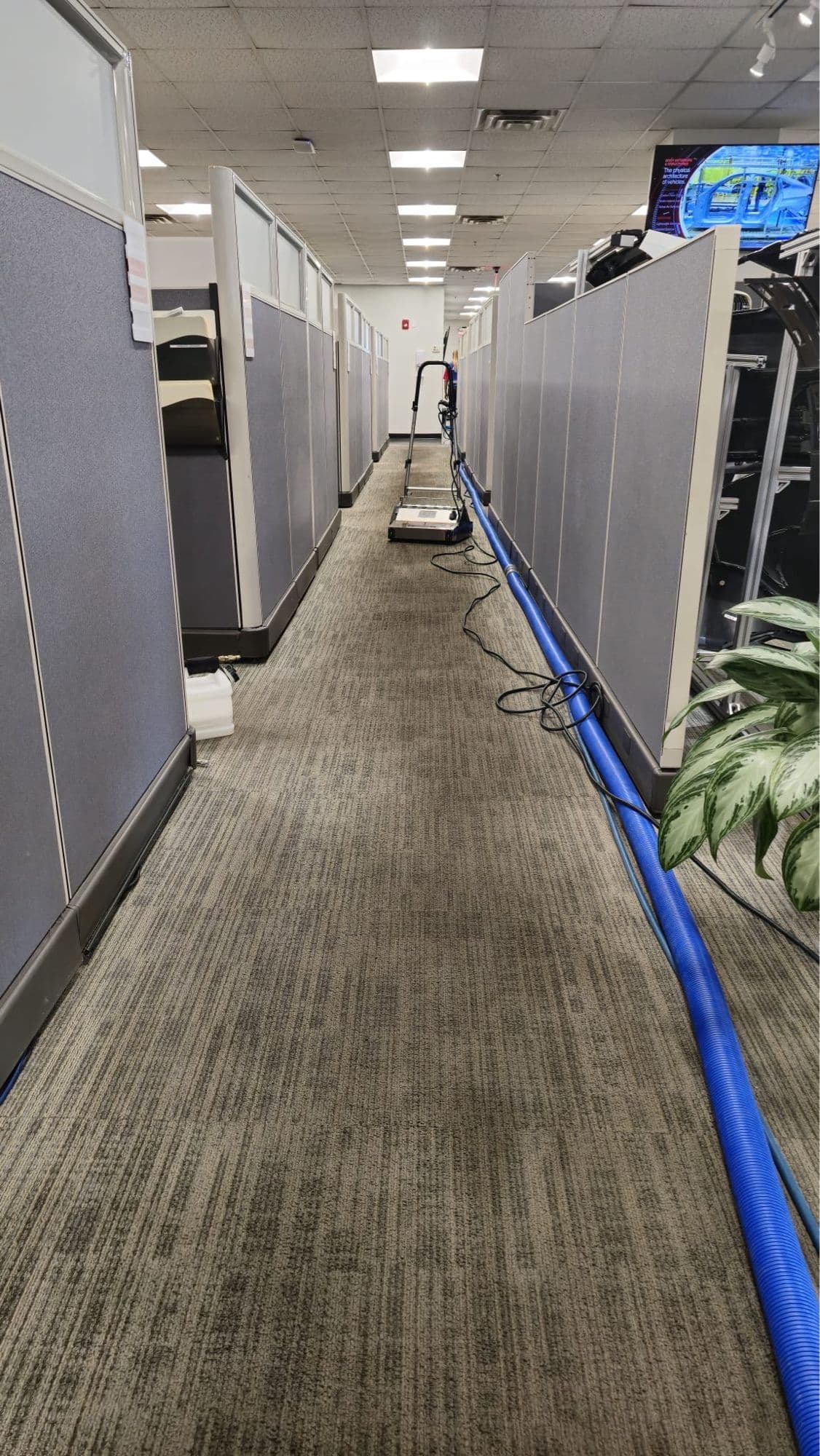
High-traffic corridor between cubicles. Soil bonded to fiber tips, traffic lanes clearly visible down the center.
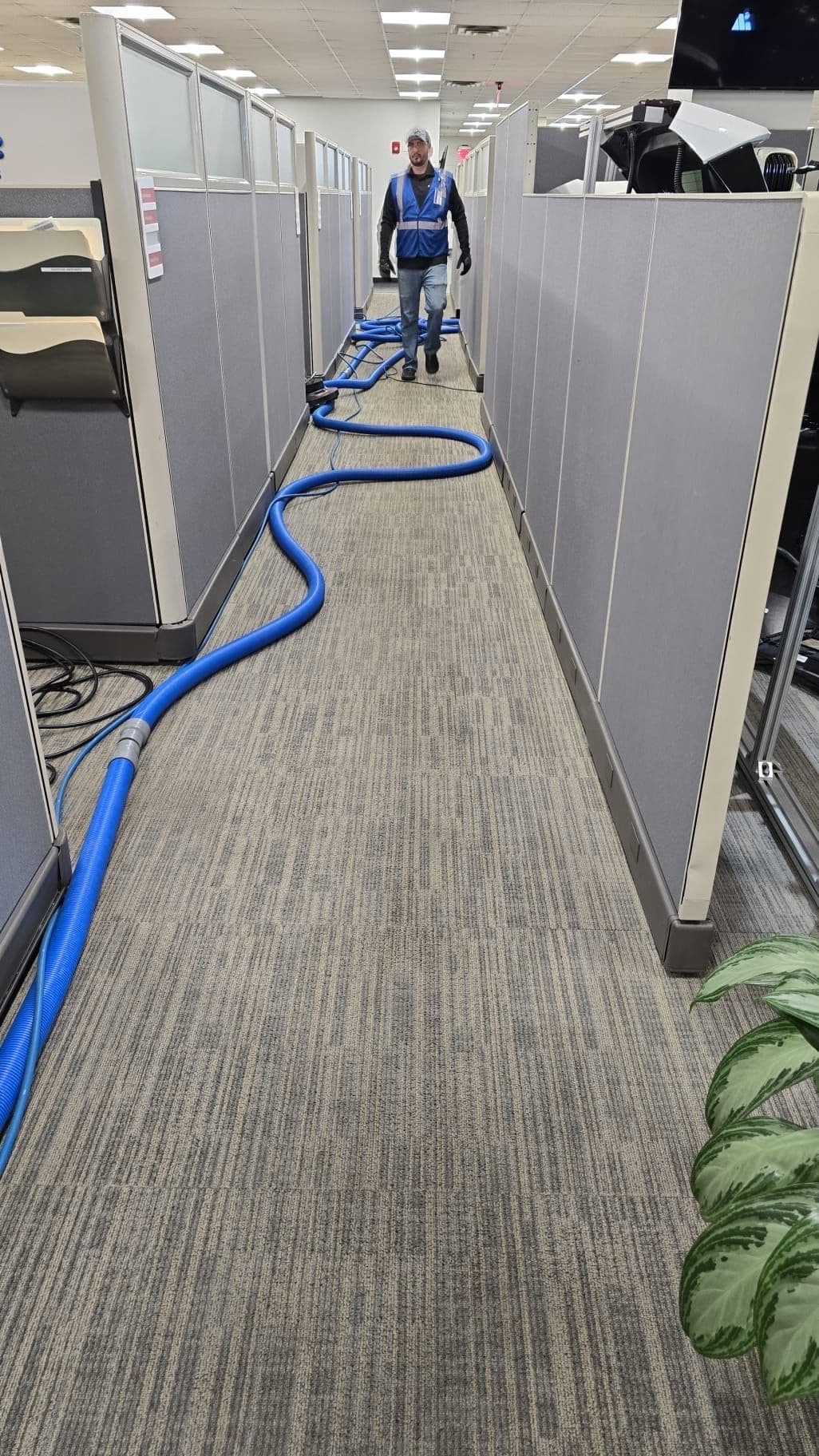
Post hot water extraction. Traffic lanes eliminated, fiber pile restored. Same corridor, same lighting, different result.
Trilith Studios.
Replacement prevented.
Trilith Studios is a production environment. Carpet takes the kind of abuse that most commercial properties never see: equipment movement, extended occupancy, food and beverage near set, heavy foot traffic on a daily basis.
A planned carpet care program, combining scheduled extraction and encapsulation on the right zones, kept their carpet serviceable and presentable. The kind of deterioration that triggers premature replacement never materialized.
Built for your environment.
Each industry comes with different carpet types, soil profiles, and scheduling constraints. We have worked in all of them.
Frequently Asked Questions
It depends on traffic volume and carpet type, but most commercial environments benefit from hot water extraction every 3 to 6 months, with interim encapsulation monthly or quarterly in high-traffic zones. A planned maintenance schedule built around your specific zones and traffic patterns will always be more cost-effective than reactive cleaning. We build those schedules as part of every commercial carpet program.
They are often used interchangeably, but there is a technical distinction. True steam cleaning uses steam at high temperature. Hot water extraction uses heated water under pressure injected into the carpet pile and immediately vacuumed back, extracting suspended soils. Hot water extraction is the IICRC-recommended method for deep commercial cleaning and produces better soil removal than most steam methods. Both are effective when applied correctly, but the extraction process is more thorough for heavily soiled commercial carpet.
Usually, yes. Encapsulation cleaning has a 30 to 60 minute dry time and can be done in sections while areas stay accessible. Hot water extraction requires the area to be cleared but we schedule overnight or weekend work to accommodate operating hours. For 24/7 facilities we work zone by zone so the building is never fully shut down. We coordinate scheduling with your facilities team before every job.
That is a residue problem. When detergent-based cleaners are not fully extracted or rinsed, the residue dries on the fiber and acts as a soil magnet. The carpet re-soils faster than before it was cleaned. IICRC-certified cleaning includes a proper rinse and neutralization pass to prevent this. If your current provider leaves carpet that looks clean for a week and then darkens rapidly, residue is likely the cause.
Yes, when applied correctly after a proper extraction. Protector coats the fiber and creates a barrier that slows soil penetration and causes spills to bead instead of immediately absorbing. It is not permanent and needs reapplication after subsequent deep cleans, but it measurably extends the time between required cleanings and improves spot treatment results. On high-traffic commercial carpet it is almost always worth the additional cost.
Matted, crushed pile in traffic lanes does not always mean the carpet is done. Matting is often a fiber issue that extraction and proper agitation can partially reverse. Permanent discoloration, fiber loss, backing damage, or delamination are replacement indicators. Before you replace, have an IICRC-certified assessment done. We have recovered carpet that facilities managers had already written off for replacement, which saves real money.
Start with a
carpet assessment.
We walk your facility, assess fiber types and soil conditions, and recommend the right method and schedule for your environment. No upsell. No pressure. Just an honest picture of what your carpet needs and what it will cost.