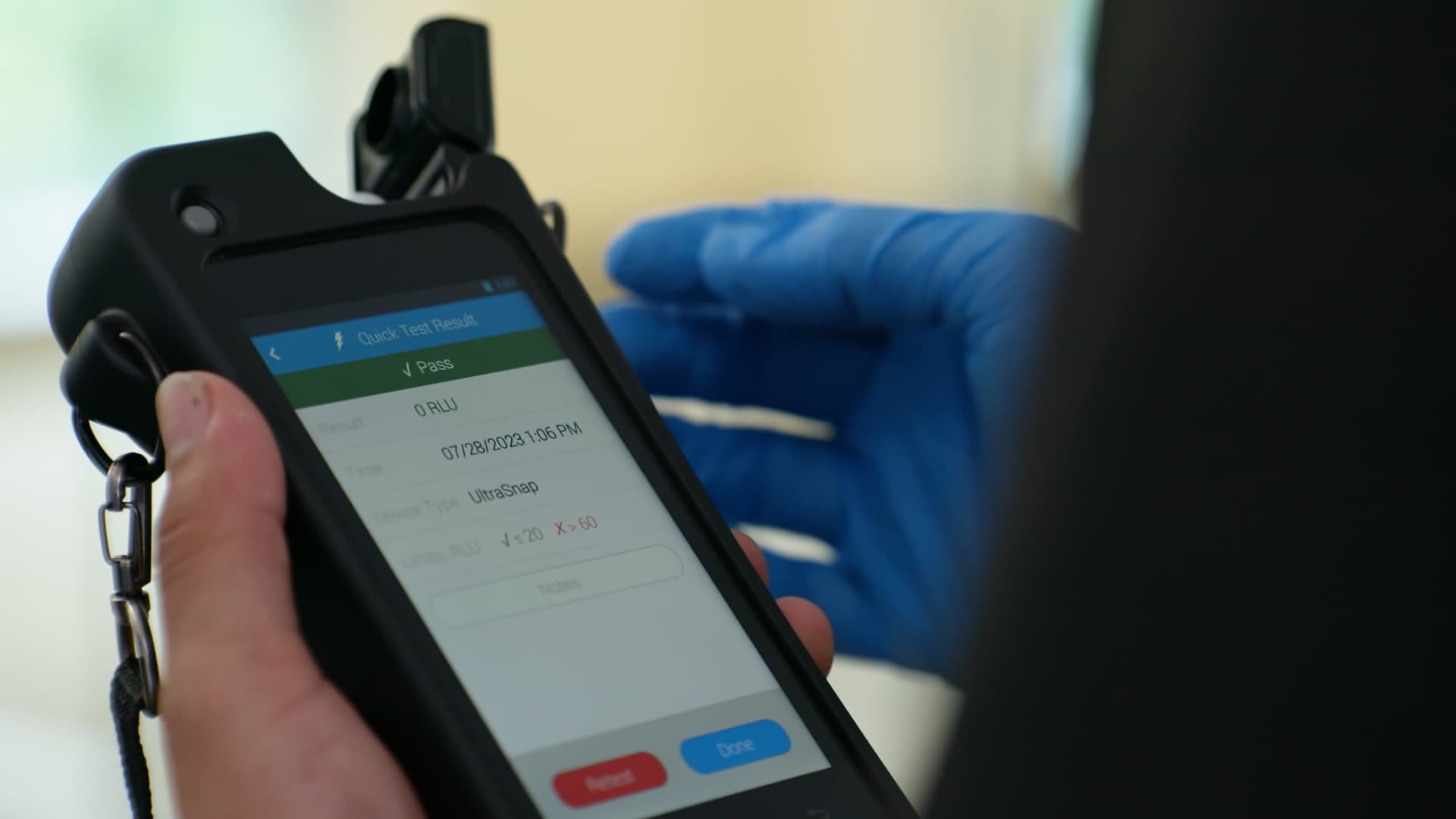
Clean rooms don't prevent infections.
Clean protocols do.
A healthcare facility that looks clean and one that meets infection control standards are two different things. We build programs around CDC guidelines, EPA-registered disinfectants, and documented compliance that survives an audit.
Millennium provides infection control-grade cleaning for medical facilities using EPA-registered hospital-grade disinfectants with documented contact times, bloodborne pathogen-trained teams, and GPS-verified shift completion with zone-by-zone photo documentation. Every program is built around CDC environmental infection control guidelines. Our 99.7% service completion rate spans urgent care clinics and occupational health facilities within large-scale campus operations, with all shifts tracked and documented in real time.
Your patients see the lobby.
Regulators see the protocol.
Medical environments demand cleaning programs built around infection prevention, not just appearance. Every surface category, every disinfectant contact time, every waste segregation step is documented and auditable. We currently maintain urgent care and occupational health facilities as part of large-scale campus operations. For Atlanta-area medical office buildings, clinics, and ambulatory facilities, see our medical office cleaning Atlanta program for location-specific protocols and compliance documentation.
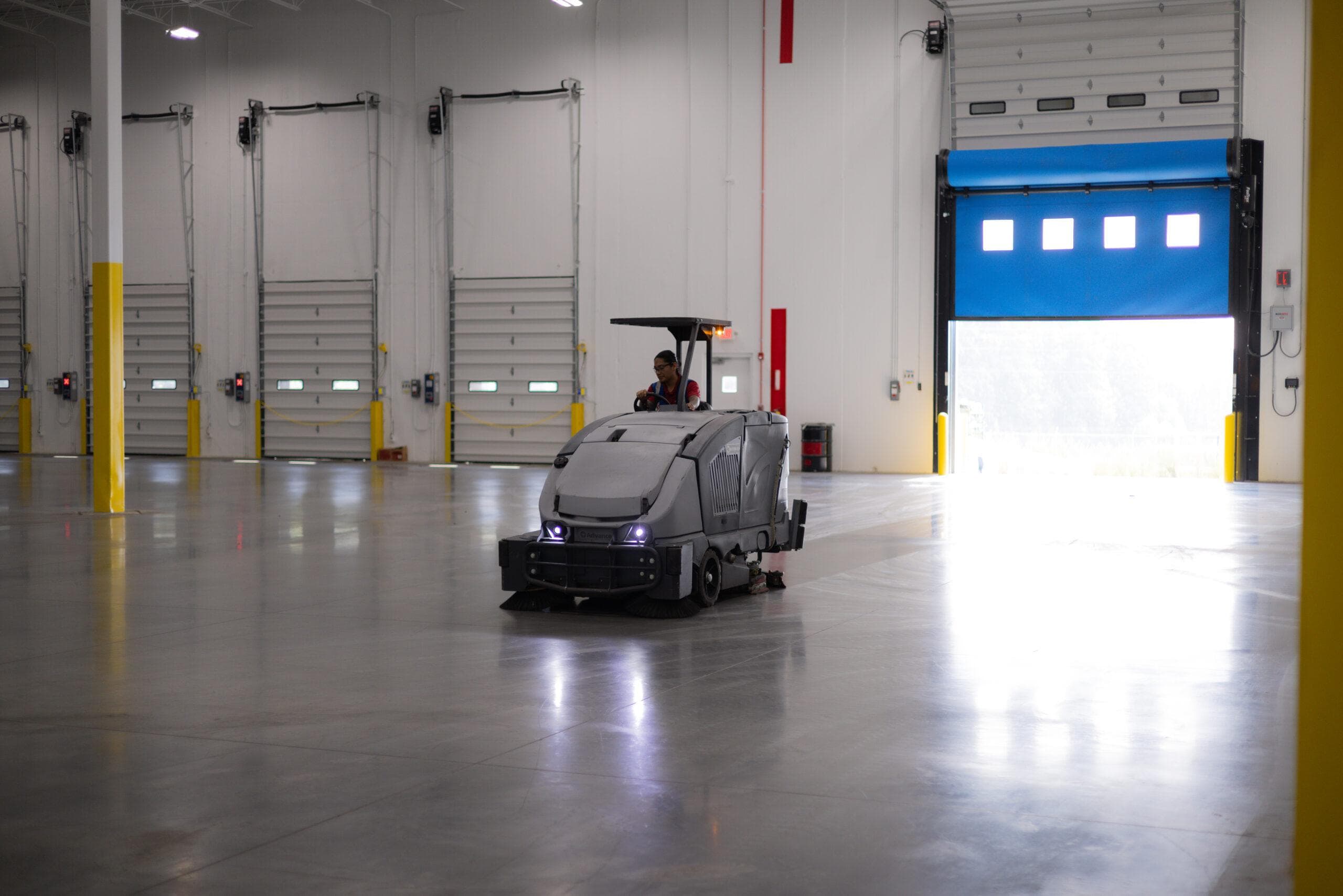
Documentation that survives a regulator, not just a walkthrough.
GPS-tracked shifts, zone-by-zone photo documentation, product usage logs, and training certifications. All accessible before anyone asks for them.
Cleaning Chemistry
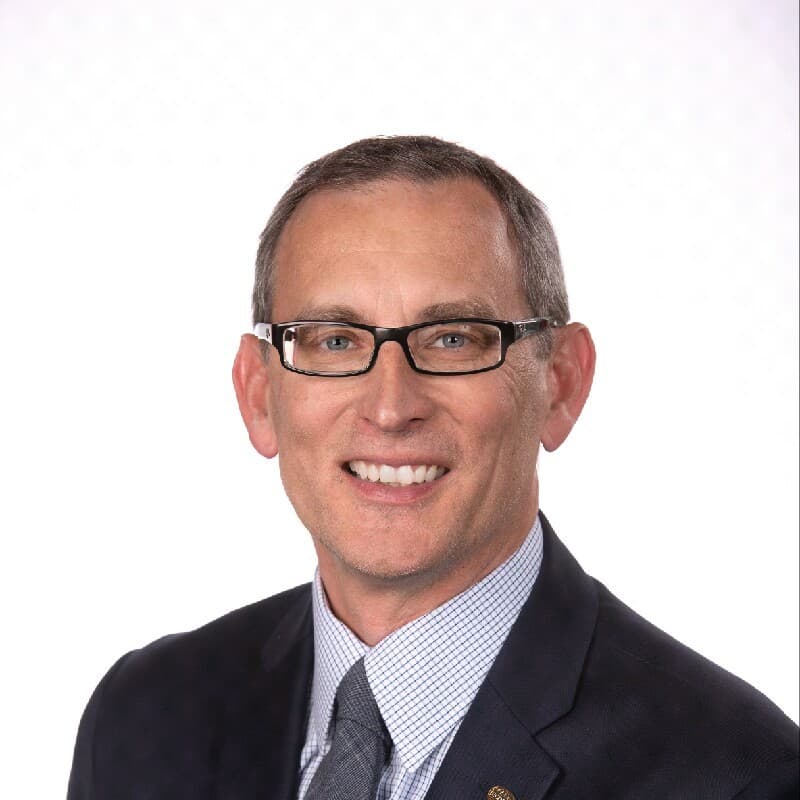
Thomas Burbey
Thomas joined Millennium Facility Services after 30 years in healthcare with Ecolab, the world's largest provider of cleaning, sanitization, and infection prevention chemistry, including a role as Vice President.
His chemistry-led approach to healthcare cleaning shapes how we select disinfectants, set contact-time discipline, match products to pathogens, and design programs that pass surveyor scrutiny. EPA Lists K, P, S literacy. AORN-aligned OR turnover protocols. SHINE-trial-informed ATP verification cadence. Three decades of judgment compressed into the operational standards on every shift.
Built for environments where
clean is not cosmetic.
Every capability below exists because a healthcare environment demanded it. Infection control is the standard, not the upsell.
Infection Control Cleaning
EPA-registered hospital-grade disinfectants applied with documented contact times. High-touch surfaces prioritized. Every product selected based on the pathogen profile of the environment.
Biohazard-Adjacent Protocols
Sharps-aware cleaning, bloodborne pathogen protocols, and proper waste segregation. Teams trained before they enter any clinical space. Documentation available on demand.
Waiting Room & Patient Areas
High-traffic patient areas cleaned on a frequency schedule tied to visit volume. Seating, check-in counters, and shared surfaces disinfected between peak periods, not just at end of day.
After-Hours Clinical Cleaning
Deep cleaning performed after patient hours with full disinfection of exam rooms, treatment areas, and procedure spaces. Scheduled around your operational calendar, not ours.
GPS-Verified Compliance
Every shift is GPS-tracked and photo-documented by zone. Compliance reports generated automatically. Your facility manager has audit-ready documentation without chasing anyone for it.
Multi-Building Campus Programs
Medical campuses with multiple buildings, clinics, and administrative offices managed under a single program. Consistent standards across every structure, one point of accountability.
Who we work with.
Our medical facility programs are built for healthcare environments where compliance is non-negotiable and patient safety drives every decision.
Hospitals & Health Systems
Multi-bed acute care facilities under CMS Conditions of Participation and Joint Commission's 2024 IC chapter. Documented terminal cleaning, EPA List K and List P pathogen protocols, audit-ready EVS staff that survive a live surveyor interview.
Ambulatory Surgical Centers
AORN 2026 Environmental Hygiene Guideline. Between-case turnover cleaning. Terminal cleaning of every surface including air supply diffusers. AAAHC IPC.170 documented compliance. Color-coded microfiber system, single-use cleaning materials.
Urgent Care & Occupational Health
High-traffic walk-in clinics and employer-sponsored occupational health facilities. Between-patient cleaning, end-of-day disinfection, and documented compliance built around the after-hours window operators actually have.
Multi-Building Medical Campuses
Corporate health campuses with multiple clinic buildings, administrative offices, and shared facilities managed under a single cleaning program with consistent infection control standards across every structure.
Medical Office, Dental, Specialty Clinics
Medical office buildings, dental practices, outpatient specialty clinics, and rehabilitation facilities where HIPAA Business Associate documentation, OSHA bloodborne pathogen training, and patient-safety standards drive vendor selection.
The facility director's
healthcare cleaning library.
We publish what we know. Standards. Pathogen protocols. Cost benchmarks. Verification methods. Joint Commission survey realities. All free, all uncited, all built for the people who own the contract.
Download the 47-page Standards GuideFrom assessment to compliant in 30 days.
Medical facilities cannot afford a messy transition. Our onboarding methodology protects patient safety from the first day.
Facility Assessment
We walk every patient area, clinical space, and common zone with your operations team. Surface categories, risk levels, and traffic patterns are mapped before anything is proposed.
Protocol Design
Disinfection schedules, product selections, and frequency charts built around your patient volume and regulatory requirements. Nothing generic.
Team Certification
Every team member completes bloodborne pathogen training, OSHA orientation, and facility-specific protocols before entering your environment.
Live Operations
GPS-verified shifts, zone-by-zone documentation, and compliance reports generated automatically. Audit-ready from day one.
Common questions from
healthcare facility leaders.
Medical facility cleaning follows CDC environmental infection control guidelines, OSHA bloodborne pathogen standards (29 CFR 1910.1030), and EPA-registered disinfectant protocols. Every surface category has a specific cleaning frequency and product requirement based on risk level.
Medical cleaning uses EPA-registered hospital-grade disinfectants with documented contact times, requires bloodborne pathogen training for all staff, follows strict waste segregation protocols, and provides audit-ready compliance documentation. Commercial cleaning focuses on appearance. Medical cleaning focuses on infection prevention.
Yes. We currently maintain urgent care and occupational health facilities as part of large-scale campus operations. Our teams are trained in bloodborne pathogen protocols and follow documented infection control procedures for all clinical environments.
Medical facility cleaning typically ranges from $0.18 to $0.35 per square foot per month depending on facility type, patient volume, clinical vs. administrative area ratios, and specific compliance requirements. We provide a custom quote after a no-obligation facility assessment.
All team members assigned to medical facilities complete OSHA-compliant bloodborne pathogen training, facility-specific orientation covering infection control protocols, and EPA-registered product handling certification. Training documentation is maintained and available for audit at any time.
Our teams are trained in sharps-aware cleaning procedures and bloodborne pathogen protocols. We coordinate with your facility on waste segregation, proper disposal pathways, and incident documentation. We are not a biohazard remediation company, but we operate safely in biohazard-adjacent environments.
Yes. Multi-building medical campus programs are managed under a single contract with consistent infection control standards across every structure. One point of contact, one set of protocols, and consolidated reporting for all buildings.
Section 3008 of the Affordable Care Act created a 1 percent Medicare payment reduction for hospitals in the worst-performing quartile on the Total Hospital-Acquired Condition Score. In FY2025, 724 hospitals were penalized. For a 200-bed hospital with $100 million in annual Medicare revenue, that is a $1 million annual penalty. Cleaning programs are the highest-leverage HAI intervention with no new clinical equipment required.
On July 1, 2024, Joint Commission consolidated 12 infection control standards with 51 elements of performance down to 4 standards with 14 EPs. The new IC Assessment Tool shifts survey methodology from documentation review to live practical implementation testing. Surveyors interview EVS staff directly. They ask technicians to verbally state contact times, which products are required for a C. diff room versus a general clean, and the cleaning sequence. Cleaning contracts must hold vendors accountable for frontline staff knowledge, not just binder documentation.
ATP bioluminescence testing measures organic residue on cleaned surfaces in 10 to 15 seconds. The healthcare benchmark is 100 RLU or below, established by Mulvey 2011 and adopted by NHS Scotland. The 2022 SHINE trial proved that ATP feedback to EVS staff drops multidrug-resistant organism incidence in ICUs where fluorescent marker monitoring did not. It is the verification layer surveyors expect to see documented.
C. difficile is spore-forming. Standard quaternary ammonium disinfectants will not kill the spores. EPA List K sporicidal products are required. Sodium hypochlorite at 1:10 dilution, accelerated hydrogen peroxide formulations, or peracetic acid. Contact time runs 4 to 10 minutes per label. A vendor formulary that lacks EPA List K coverage at the point of use is not running a defensible C. diff protocol.
Your healthcare facility deserves
infection control, not just cleaning.
We assess your facility, map every surface category and risk level, and deliver a program built around CDC guidelines and your patient volume. Documented compliance from the first shift.