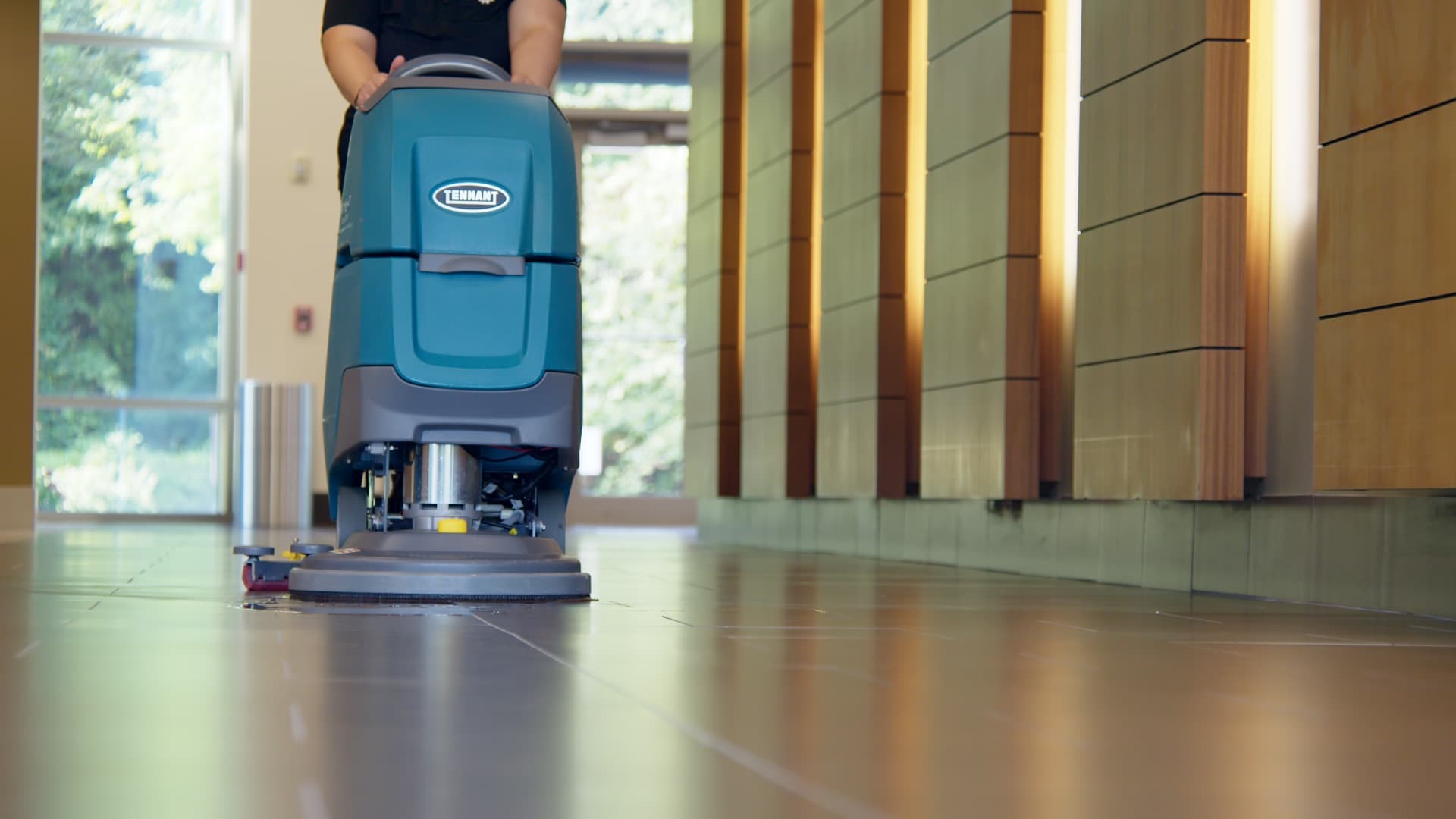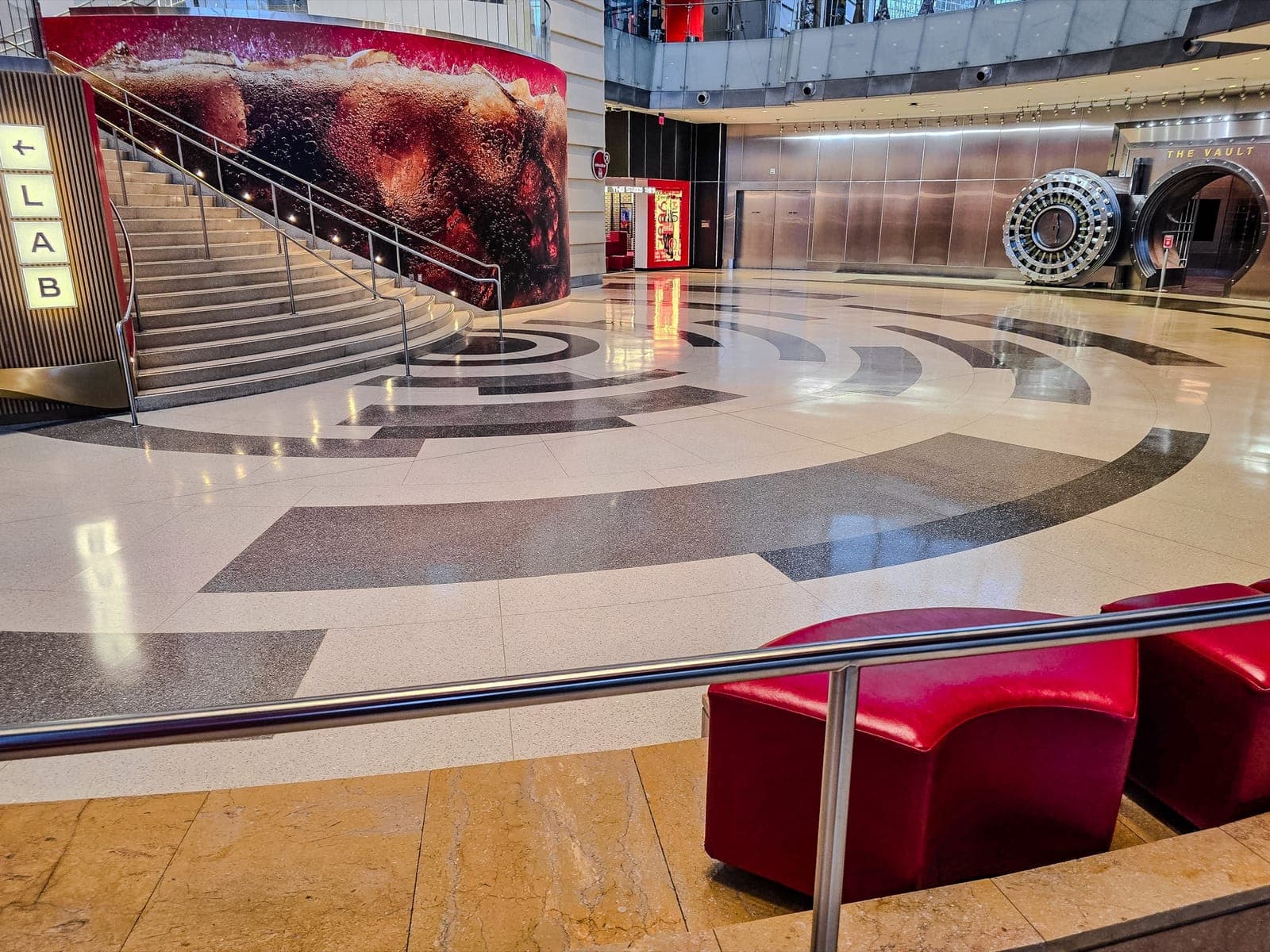
We deep-clean and restore commercial tile for Atlanta offices, restrooms, lobbies, and food service areas. IICRC certified. Color sealing that holds for 12 to 18 months. Not just mopping.
Every tile surface requires different chemistry and pressure. IICRC certification means we use the correct protocol for each one.
Standard commercial ceramic. pH-neutral chemistry, grout steam extraction, and color sealing on porous grout lines.
Dense, low-porosity surface. Grout lines still absorb soil. High-pressure extraction restores grout without damaging the tile face.
Marble, travertine, granite, slate. Requires neutral pH chemistry exclusively. Acid cleaners cause permanent etching.
24x24 and larger. Wider grout joints accumulate more soil. Steam extraction and sealing protocol adapted to joint width.
High grout-to-tile ratio means more grout surface to clean and seal. Common in restrooms and feature walls.
Requires a different maintenance approach than ceramic. Strip, clean, and finish program separate from grout restoration.
Six steps from assessment to sealed grout. Most commercial tile that looks like it needs replacement just needs this process.
We assess the tile and grout condition, identify problem zones, note tile type and grout porosity. Before photos documented for your records.
Appropriate pre-spray chemistry applied to grout lines. Enzyme treatment for biological contamination in restrooms. Alkaline degreaser for food service grease. Full dwell time for deep penetration.
High-temperature, high-pressure steam extraction cleans both the tile face and the grout lines. Pulls embedded soil the pre-spray loosened. Most of the grout-line soil removed in this step.
Persistent staining in grout lines addressed with targeted treatment. Heavy discoloration that steam alone cannot clear treated with appropriate stain removers matched to the contaminant.
Penetrating color sealer applied to clean, dry grout lines. Creates a sealed surface that resists absorption. Grout appearance locked in and protected for 12 to 18 months.
After photos, service record, and GPS-verified completion through MillenniumOS. You have a documented record of the condition and work performed.
Most commercial tile grout starts white or light gray. After years of mopping with dirty water, the mop pushes soil into the porous grout. The grout absorbs it. Every mop cycle adds more. The grout darkens progressively.
Mopping cannot reverse this. The mop head is not clean enough and the pressure is not high enough to extract grout-embedded soil. The floor looks clean after mopping because the tile face is clean. The grout lines are still dark.
Steam extraction with chemical pre-treatment removes the embedded soil. Color sealing locks in the restored appearance and prevents the re-absorption cycle. The result looks like new grout without removing and replacing a single tile.

Transparent pricing. Actual quotes based on tile type, grout condition, and scope.
| Service | Price Range | Notes |
|---|---|---|
| Tile deep clean | $0.35 to $0.55/sq ft | Steam extraction, tile face and grout lines |
| Grout restoration + color seal | $0.55 to $0.75/sq ft | Deep clean plus sealer application |
| Restroom tile (floor + wall) | $150 to $400/restroom | Per restroom, depends on size and condition |
| Color seal only (re-seal) | $0.10 to $0.20/sq ft | On previously restored, clean grout |
| Natural stone deep clean | $0.45 to $0.80/sq ft | pH-neutral protocol, higher labor |
All pricing based on facility walkthrough. Actual quotes may vary based on grout condition and access logistics.
After we restore your tile and grout, we can protect it permanently. No more strip-and-wax cycles. No more recurring finish costs.
After tile and grout restoration, we can apply Micron molecular floor sealer, a one-time application that bonds at the molecular level and lasts years. This is a different category of protection than anything in a standard strip-and-wax program.
Traditional strip-and-wax costs $0.50 to $1.00 per square foot every six months. On a 10,000 square foot floor, that is $5,000 to $10,000 per year in recurring floor finish costs, every single year, forever. Micron eliminates that cycle.
Why This Matters
Strip-and-Wax vs. Micron Molecular Sealer
Application frequency
Strip-and-Wax
Every 6 months
Micron Sealer
One-time
Cost per cycle
Strip-and-Wax
$0.50 to $1.00/sq ft
Micron Sealer
One-time investment
Chemical stripping required
Strip-and-Wax
Yes, every cycle
Micron Sealer
No
Protection depth
Strip-and-Wax
Surface layer only
Micron Sealer
Molecular bond
Longevity
Strip-and-Wax
6 to 12 months
Micron Sealer
Years
IICRC certification for tile and stone cleaning covers chemistry selection, pH compatibility with each surface type, pressure settings for different tile and grout configurations, and the correct restoration protocol for each contamination type.
Natural stone is the highest-risk surface. Marble and travertine are damaged permanently by acidic cleaners. Standard tile cleaners are often acidic. An uncertified technician applying the wrong chemistry to marble produces etching that requires professional stone grinding to correct. IICRC certification prevents that.
Commercial tile and grout cleaning in Atlanta runs $0.35 to $0.75 per square foot depending on tile type, grout condition, and scope. Basic deep cleaning without restoration is at the lower end. Grout color sealing as part of a full restoration adds $0.10 to $0.20 per square foot. Restroom projects are often priced per restroom at $150 to $400 depending on size and condition.
Ceramic, porcelain, natural stone (marble, travertine, granite, slate), large-format tile, mosaic tile, and VCT. Each requires different chemistry and pressure. Natural stone requires pH-neutral chemistry only. VCT requires a strip, clean, and finish program rather than steam extraction. We identify the tile type before selecting the protocol.
Yes, in most cases. Grout that appears gray or dark is typically stained from soil absorption, not structurally failed. Steam extraction with chemical pre-treatment removes embedded soil from porous grout. Color sealing locks in the restored appearance for 12 to 18 months. Grout replacement is only necessary when the grout has physically failed, crumbled, or been damaged.
Grout color sealing in a commercial facility typically lasts 12 to 18 months before reapplication. High-traffic and restroom applications at the lower end. Light-traffic office tile at the higher end. Maintenance mopping with pH-neutral chemistry preserves the seal longer.
Yes. Restroom tile is one of the primary applications. Urine salt and biological contamination in grout lines requires enzyme pre-treatment and high-pressure steam extraction. Standard mopping does not address grout-line contamination. We also apply sealer after cleaning to prevent re-absorption. Restroom tile cleaning is available as a standalone service or as part of a facility maintenance program.
Natural stone requires pH-neutral chemistry exclusively. We use IICRC-certified protocols for marble, travertine, granite, and slate. Acidic cleaners, including many standard tile cleaning products, etch stone surfaces permanently. Our technicians identify the stone type before selecting chemistry. We do not apply standard tile cleaning products to natural stone.
A 2,000 sq ft commercial tile area with deep cleaning and grout sealing typically takes 4 to 6 hours. Restroom projects run 1 to 2 hours per restroom. Most Atlanta commercial projects are scheduled for overnight or weekend windows to avoid business disruption. Tile and grout can be walked on approximately 2 to 4 hours after sealing.
Yes. We serve the full Atlanta metro including Alpharetta, Marietta, Sandy Springs, Buckhead, Midtown, Downtown, Decatur, Dunwoody, Norcross, Smyrna, Roswell, Kennesaw, and Peachtree City.
Yes. Many of our Atlanta facility services accounts include scheduled tile and grout maintenance as part of their program. Annual deep clean with bi-annual sealing is common. One vendor, one invoice, one account manager for all floor services.
We assess your tile condition, identify grout type, and quote the correct restoration scope. No generic packages.